Piero Busso - Langhe Nebbiolo 2024
Once more we're drinking Nebbiolo from Piedmont: from Piero Busso, there's a bottle of Langhe Nebbiolo 2024.
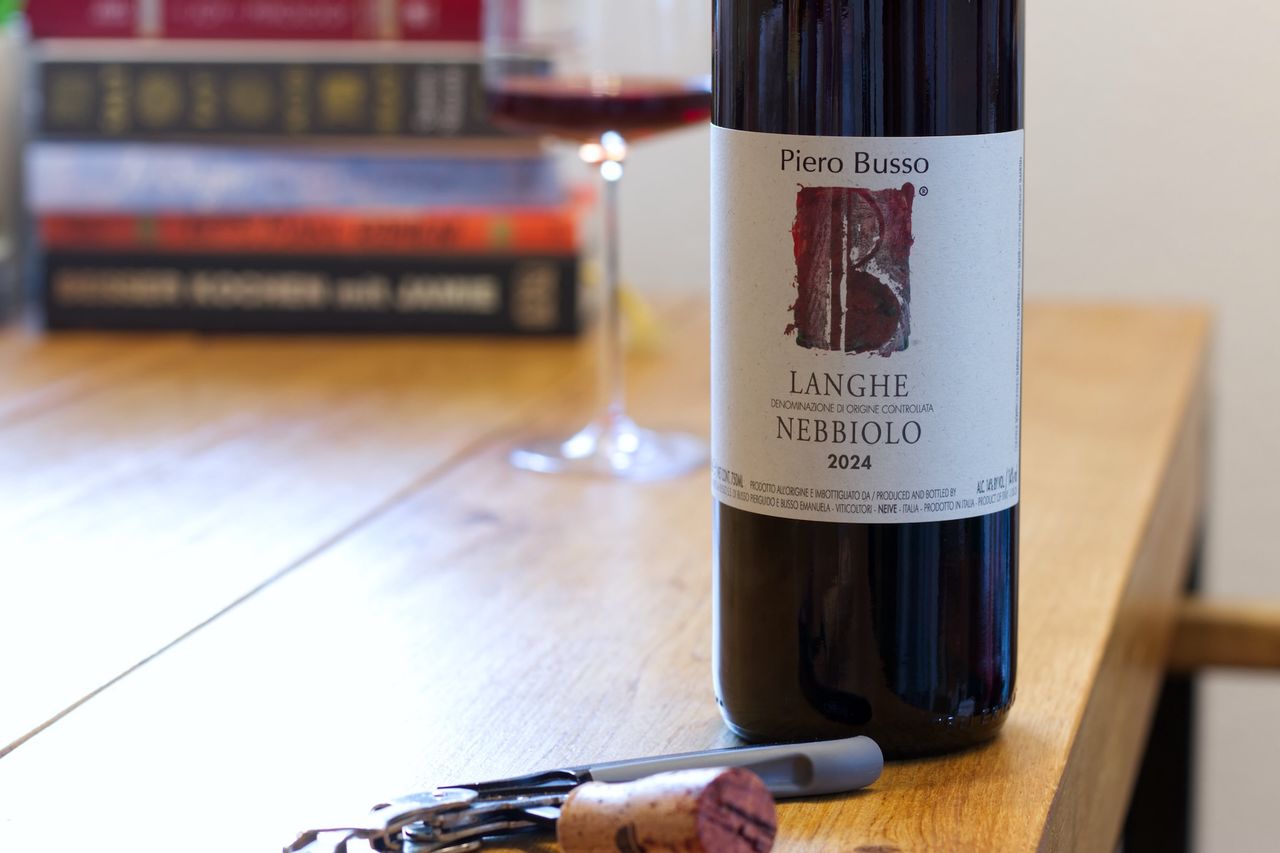
The clocks have changed (last week they did at least around here). The poor man’s jet lag. And because my body will spend the next few days with the feeling of “Oh, it’s still that early” and “Oh, it’s already getting dark”, I need some consistency in the glass. To balance things out. And that’s why we’re drinking Nebbiolo from Piedmont yet again. The Busso family is devoted to Barbaresco. Piero’s father founded the estate in 1948, and after his early death in 1970, Piero took over. The first Barbaresco was bottled in 1982, the portfolio of single vineyards was expanded, and today there is a whole bouquet of Barbarescos in the range. The family now farms around 10 hectares, and the next generation, Pierguido and Emanuela Busso, is on board as well. We have the entry-level wine in the glass, at least as far as Nebbiolo is concerned. The Langhe Nebbiolo is harvested from younger vines and from plots on richer soils that don’t fit into the single-vineyard wines. It grows around the commune of Neive, is fermented in stainless steel tanks and then aged in used wooden casks. And yes, I’m well aware that 2024 is very young, even for the entry-level wine. All the more so when its colleague from 2019 was already so furry last time. But we’ll just have to get through this together. Besides, we thought ahead and planned food around it.
The wine seems distant in the first few minutes after pulling the cork. But if you let the glass sit for half an hour and keep the last few fruit flies from going for a swim, that changes. Sour cherries, red berries, a few red flower petals and spice. Much finer than you thought at first, more delicate. Just to be sure, I stick my nose in the glass a few more times. That certainly has nothing to do with being wary of how much structure might be about to tug at my tongue. But it’s not that extreme after all. Sure, there’s tannin. There’s a hefty dose of tannin. And towards the end of every sip, that tannin also takes command of the mouth. But there’s also an almost silky creaminess at the beginning of every sip, there are the cherries from the nose, there’s length, and if you keep drinking in small sips, the wine finds its own way into a certain balance of acidity, fruit and tannin. And with a red wine at 14 percent, small sips are a good idea anyway. It’s not cider, after all. With the ragù, it works as well as expected. The tannin melts away, but the structure remains, and so does the fruit, of course. That makes you want to empty the bottle. But we want to have something left to taste tomorrow, too.
So, day two, and just like last week, a lot is happening. Having time is quite obviously a good idea with these wines. It seems more ethereal, darker on the nose, the bright berries have practically disappeared, and the sour cherry has turned into more of a black sweet cherry. There’s more spice, eucalyptus, leather and a small ladle of rumtopf fruit. The tannin seems more reserved, the acidity crisper. It feels fresher on the palate, but more settled on the nose. Exciting. And this time I really did think ahead, because a flap steak from the Black Forest is already waiting on the grill. That works just as well as the ragù. And it also goes well with my drinking companion’s chocolate, which comes in such high percentages that I’d normally only handle it with tongs. A true all-rounder.