Castell'in Villa - Chianti Classico 2020
As the cooler season begins, we're drinking red wine. This week, a bottle of Chianti Classico from Castell'in Villa, vintage 2020.
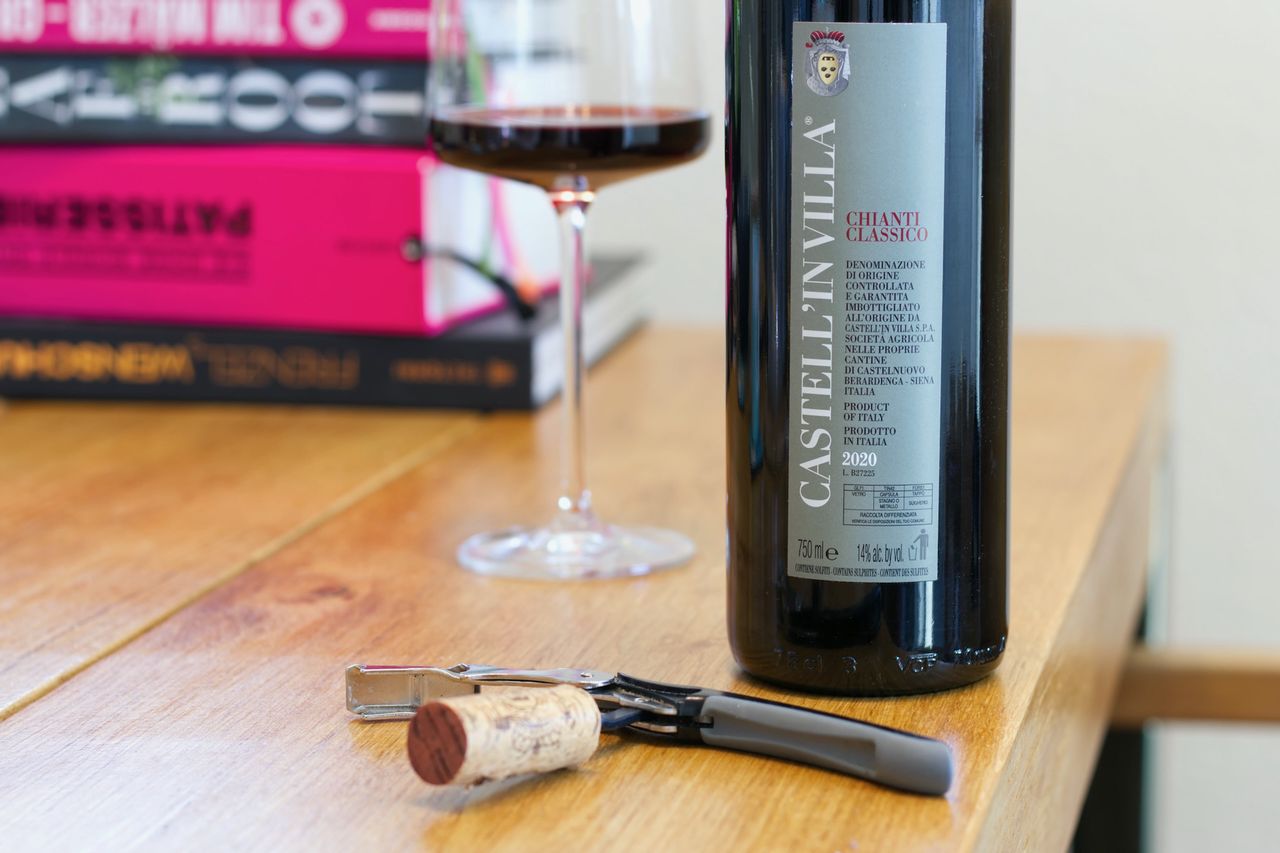
It’s getting colder, and it’s raining. Finally, one might say. The trees and meadows would certainly say so. And even though red wine tastes good in summer, it tastes just a little better when you’re looking out the window at the dreary, wet world outside. Snow would be even better, but let’s not overdo it right away, so we’ll use the first weeks of autumn for a small, virtual tour through Italy. Halfway, at least. We start in Tuscany, which we have in our glasses far too rarely. I don’t even really know why. Perhaps because of its diversity, and because I don’t really know my way around it, I end up hesitating when buying, since I don’t quite know what I should actually be buying. If you ask people who don’t care much about wine, but still drink it fairly often, for an Italian red, Chianti will surely come up a lot. How many times have I heard “A Chianti, please!” at the next table in a pizzeria. Producer? Doesn’t matter. Just Chianti. And a Chianti on the wine list is almost as certain as Pinot Grigio among the whites.
Chianti, in any case, is made from Sangiovese in Tuscany. According to Wikipedia, Italy has, or had in 2016, an almost unbelievable 68,000 hectares of it planted. That’s roughly the area in Germany planted with white grape varieties. And that means all the white varieties we grow. To become a Chianti Classico DOCG, at least 80% Sangiovese has to end up in the bottle. And beyond that, there’s a whole host of regulations on viticulture and winemaking, which are most easily looked up on Wikipedia as well. That surely plays its part in why you can order Chianti blind and more or less know what will end up in your glass. Good luck trying that with a Riesling.
Castell’in Villa’s Chianti Classico is made exclusively from Sangiovese. In fact, the estate grows almost nothing but this variety. Most of the other varieties planted across its roughly 50 hectares of vineyards have been top-grafted over to Sangiovese. The current owner, Coralia Pignatelli della Leonessa, took over the estate together with her husband in the 1960s. Sadly, her husband died young, and Coralia has continued to run the estate on her own. Wine here is made in a very traditional way. The vineyards have long been farmed organically, the grapes are fermented spontaneously and aged in large, used casks. In the case of the Classico, for one year.
Shortly after opening, during the first two or three sniffs from the glass, there is an enormous amount of fruit. But after just a few more minutes, it starts to blur. Not that it becomes imprecise. But it gets harder and harder to pin down. There’s a bit of tea, a bit of amaro, dark berries, cherries, herbs and marzipan. And although marzipan is sweet, the aroma isn’t sweet at all anymore. Quite the opposite: it becomes increasingly savory and herbal. On the palate, it feints softness and then really grips your tongue. The tannin is superb, more wool blanket than scratchy astringency. Long, and with so much acidity that the small sips cut through the tannin. At this point, it tastes more of cherry than it smells of cherry, and with the wine in your mouth, the fruit shows up more often on the nose again, too.
Even more so on the second evening. Darker fruit, dark, almost black cherry, blackberries, that direction. But the idea of amaro won’t let go. I’m a big fan of Cynar, and it’s a little reminiscent of it. And a control sniff at the Cynar bottle proves me right, at least in part. The amaro doesn’t have nearly as much fruit, after all. The 14% it managed to hide completely on the first evening is slowly starting to surface. The structure, in any case, has gotten even better. I like how much tannin there is and how pleasant it still is to drink. This is top-shelf tannin, so fine-grained that you hardly want to call it grainy at all. There’s freshness, some warmth in between, there’s volume and structure. There’s simply everything a red wine like this needs on the first rainy days. Only the label. They could have stuck it on straight, instead of just crooked enough to be annoying. Because now part of me wants to pick at it, peel it off and slap it back on. And then it would surely end up even more crooked than it already is. But hey, there’s always something.