Keller - Kirchspiel 2020
We drink a bottle of Riesling Kirchspiel 2020 from Klaus Peter Keller in Rheinhessen.
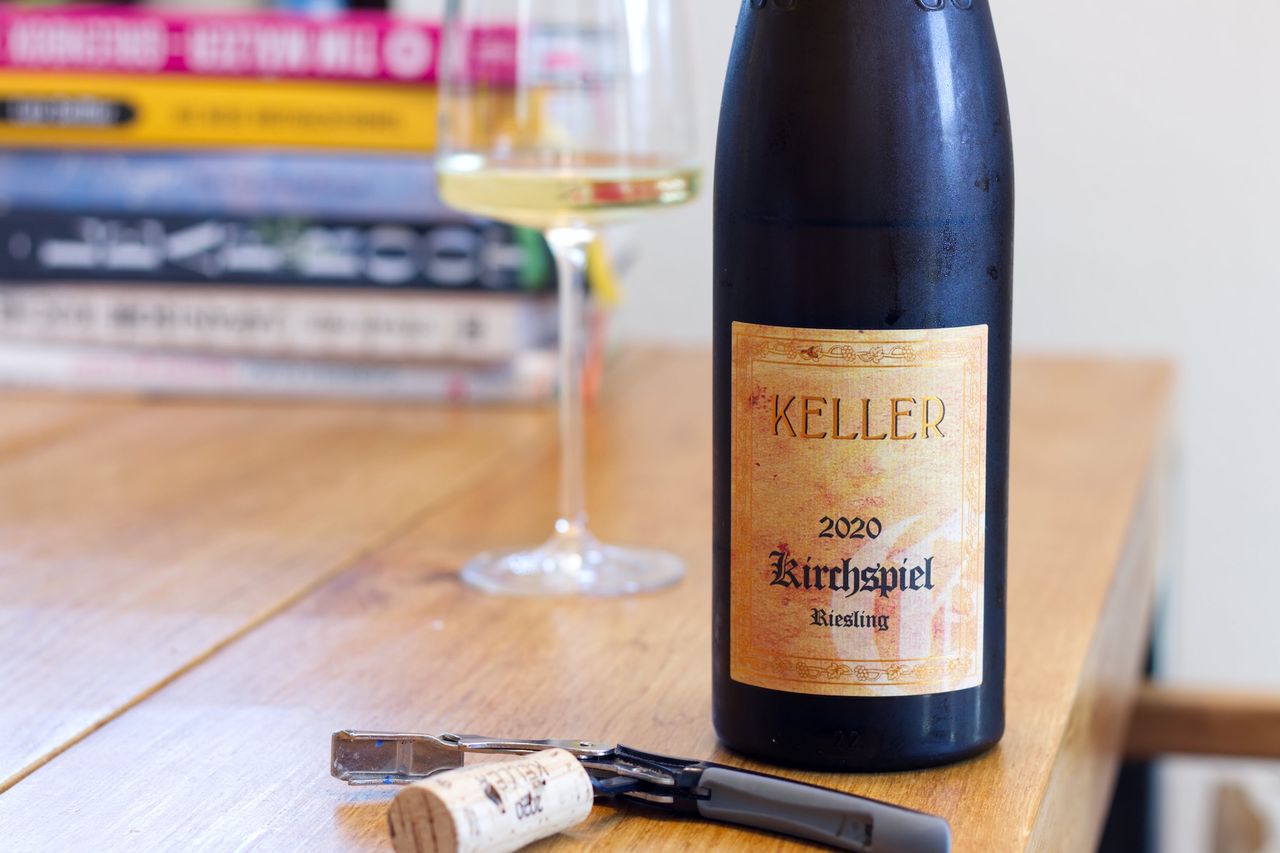
It is probably unavoidable that, if you spend any time with Riesling, sooner or later you will have a bottle with this label standing on your table. Nor will there be much argument if you say that top-flight dry Riesling and wine from Klaus Peter Keller are often used as synonyms. The wine that first shoots to mind is the G-Max. The one offered only in the wooden case that once held 11 other bottles, now just 5. The one that, for dry Riesling, broke through sound barrier after sound barrier when it comes to secondary-market prices and auctions. The one I have not even tried to buy, because even ex-cellar it sits in a price category that only makes me shake my head. But of course, for me too it is the name that flies through the synapses when I think of dry Riesling at the very top.
This bottle of Kirchspiel is my first bottle of Riesling with the orange label. As a bottle, and as a wine at all, because tastings that pour Keller are expensive, and in a restaurant, too, you know what sort of prices are called up for it. The estate knows this as well, of course. There are apparently blacklists that resellers end up on, and the prices for the wines have climbed over the last few years. This particular bottle I picked up, if memory serves, for just under 50 euros. Cellar-door price at the time. A lot of money for a bottle of Riesling, little money compared to everything the search engine turns up on the subject. And honestly, the matter was then settled for me too, because Riesling ends up on our table less and less often anyway, and, fortunately, the hunting instinct for these wines never really took hold of me. But to have tried it, yes, that I did have to do at least once, and my patience for any further ageing is used up exactly today.
It is also somehow a shame that, in my head, Keller always immediately opens up the secondary-market-price discussion. Precisely because the wines, ex-cellar, are actually priced pretty reasonably compared to the rest of Rheinhessen’s top tier. If you can get them, that is. Klaus Peter Keller took over responsibility at the long-established estate around the turn of the millennium and then, in Flörsheim-Dalsheim in Rheinhessen, achieved what most winemakers can only dream of: making wine that is sought after and drunk all over the world. What gets drawn from those vineyards into the bottle has, in any case, helped put names like Hubacker on the international map in the first place, and as a lighthouse it has surely also paved the way for many another winemaker on the national and international market. By now son Felix is part of the estate as well, devoting himself more and more to Pinot and Chardonnay too. The vines in the Westhofen Kirchspiel stand on limestone and face east. As much as a vineyard in this part of Rheinhessen can face in any particular direction, that is, because “hill” is often already quite a grand word here for the few metres of elevation on offer.
It is lovely from the very first moment. It smells exactly like what I want to smell when I pull the cork on a Riesling GG. Very clear, spice, mirabelle plums, green apple, a tiny hint of toffee, wet stone and flint. On the palate it is really juicy, with a rather smooth acidity that only begins to bite once you slurp, digging its claws into the tongue more and more with structure. It is astonishingly uncomplicated for the first few sips. I did not know what to expect. But it would not have surprised me had this been more demanding to drink. It is not, though. It simply drinks incredibly beautifully and straight, and I like that. A lot. The more air it gets, the spicier the wine becomes on the nose, too. It turns darker, cassis, grippier, more assertive. The tongue in particular it will not let go of at all. There is a bit of sweetness there now as well. Whether that is a little residual sugar, or sweetness coming from the extract, I cannot say for want of analytical figures. But it suits the wine.
Day two comes across a touch fresher. Not all that much happens overnight, though. There is more punch in the acidity, the fruit is a little more exotic, the way passion fruit feels when you eat it. The toffee has vanished, and where on the first evening I still thought you were beginning to taste the time on the bottle, nothing at all is left. Long, deep, and today also with distinctly more resistance than the day before. Where yesterday air still brought structure, today it brings creaminess to the wine. There should be a good few years still slumbering in the bottle. But even now this is really a complete GG. This is, as I thought right after opening it, exactly what I want to drink when I reach for a bottle of Riesling. It is not the Holy Grail, it is not a moment of enlightenment, and I am not about to start chasing after these wines. I can practically hear the remark that for that you would need even more ageing, or perhaps an Abtserde after all, or the G-Max. What for? It is simply a damn good Riesling. And more than that I really do not want. And now the inner Monk can tick the bottle with the orange label off the inner clipboard, too. Lucky it was not corked. There was, after all, only the one.