Hainbusch - Lai 2024
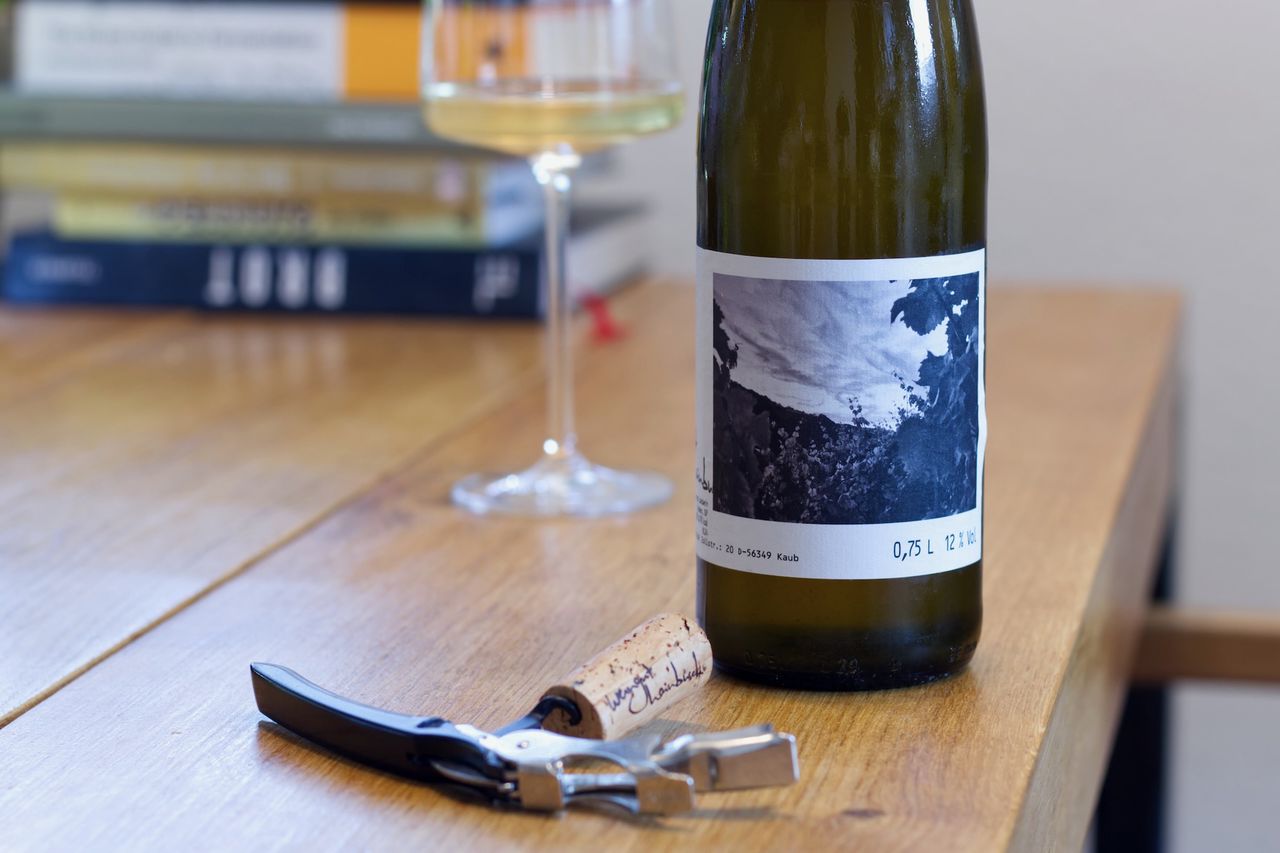
We're drinking a bottle of Lai Riesling 2024 from Weingut Hainbusch.
That smartwatch with the e-ink display is the first crowdfunding thing I can remember. And I think it’s actually the first crowdfunding thing most people remember, the starting gun, in a way, for a whole load of other things on Kickstarter. I was never really into it myself. Here and there in the early years I clicked through on a few games. Some of them arrived, some didn’t. And somehow I then lost sight of the whole crowdfunding business. It still exists, of course, and I’m reminded of it whenever a video mentions some espresso machine from Kickstarter or the like. But paying four-figure sums for things that don’t exist yet always struck me as dubious. As a way of financing an idea, though, of making dreams and visions possible, of clicking around and having a look at what people are dreaming up and want to make, for that, crowdfunding has always held an appeal.
And then, when the campaign and Luisa and Elias somehow drifted past me on social media, I clicked. Too slowly, as it turned out, because otherwise it would probably have been one of the rare magnum bottles. But still in time for a bottle from the Rauschelay and a bottle from the Blüchertal. And then I completely forgot that I’d clicked at all. As tends to happen with crowdfunding. There followed an email, a heatwave, shipping trouble and finally the delivery. Were the bottle in the photo turned a little further, you’d see that it says neither Rauschelay nor Blüchertal on it. But Lai, in this case. Landwein problems. And it says Hainbusch, and Hainbusch is precisely Luisa and Elias, who met during their training as winemakers and, as one does as a winemaker, founded a winery together in Kaub am Rhein. The Mittelrhein, to be exact. The Rauschelay vineyard borders directly on Kaub, and I’ve probably already seen it in the flesh this year. From the train window, at least. The Stuttgart–Cologne line, the one that runs along the Rhine, naturally, and with a window seat on the right in the direction of travel and, if you want to see the Roter Hang, either likewise on the return journey or with a quick glance across the way, is something I’d warmly recommend to any wine lover. The Loreley, a few kilometres further down the river, becomes a mere afterthought given all the great vineyards. In any case, the vines there stand on slate in the steep sites, looking straight out onto the river. Entirely by hand. A long time on the lees. Of course. Little intervention, plenty of nature, a bit of the idea of the old days. Not unexpected, since idealism and a pinch of madness are probably unavoidable if you found a winery these days. Perhaps a pinch of madness isn’t even enough.
The wine smells sparse at first, apple skin is there, something oxidative, cool, herbal, and with a bit of alcohol and funk on the nose. The acidity feels slippery-smooth as you drink, and yet it has real power. Only further back does structure arrive, and it lingers long on the tongue. With the wine in your mouth, the nose shifts markedly once again, as it so often does. It grows fruitier, not necessarily fruity, but fruitier than it was before. That orange ice lolly you used to get at the kiosk, only without the sugar: that’s how it smells, and by now the orange fits the acidity well too. Juicy, fresh and still fairly young. Right now it reminds me a little of the Rieslings from Lassak, and that’s a good sign. The more often you take a small sip, the more structure builds up, the more depth is there.
Overnight it turns nuttier, somehow softer, mellower, spicier. The whole character now calls to mind mellow apple with walnut and a few yellow fruits. The acidity has about as much power as on the first evening. That orange is still there, though by now it’s not quite so reminiscent of the kiosk, but if you still have the previous evening in your head, it inevitably resurfaces. As you drink, the mellowness gradually falls away, it becomes juicier, fresher, more radiant and brighter again. There’s a touch of smoke, stone and depth. This is a wine for the whole evening, ideally for more than one evening. And it cuts a fine figure with a Vesper, too. Bread. Cold cuts, fried potatoes and a few antipasti. Perfect.