Two Bottles from Kleines Gut
We drink a bottle of Chardonnay Kapelle 2022 and a Spätburgunder 2023 from Kleines Gut in Württemberg.
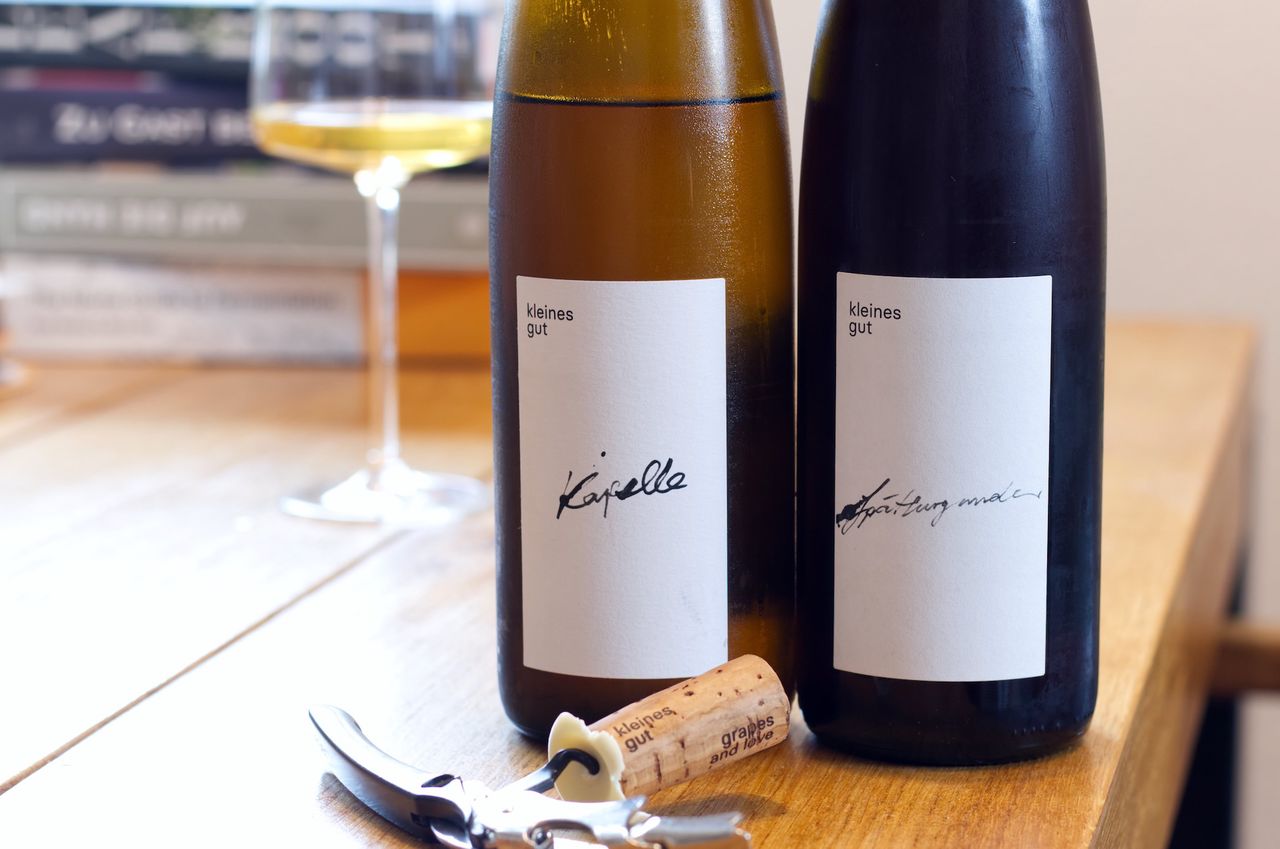
Summer still has the place firmly in its grip. We’ll probably have to get used to somehow coping between meadows that are more steppe than meadow and the daily dread of the next extreme-weather event. But you can’t just exist inside the catastrophe, after all. And one small ray of light, at least where wine is concerned, is still what’s going on in Württemberg right now. Here and there, that is, not across the board. But maybe that would just be asking too much. I also really need to stop looking at the date whenever I go searching for my last post about a winery. It doesn’t really help with the coping. Three years, in any case, is how long it’s been since we had three bottles from Frederike and Daniel on the table. Virtually, at least, because away from the writing the wines turn up rather more often. Nothing has changed about the fact that the two of them make wine in Uhlbach, in the most beautiful wine region in the Republic. Ah, but wait, a quick thank-you in Daniel’s direction still needs to go out. Because “Swabian Taj Mahal” as a name for the burial chapel on the Württemberg makes a whole lot of sense, yet somehow it never made it to me before the evening in Karlsruhe. Now it’s part of the vocabulary.
We’re drinking two wines today. For both of them, the only thing I can find on the élevage is for a vintage one year younger in each case. Daniel changes things here and there, and so in this case the info is to be taken with a pinch of salt. The Spätburgunder grows in four parcels in Uhlbach on reed sandstone and marl. It’s destemmed, spontaneously fermented, left on the skins for three weeks and then matured for almost a year in small, used wooden barrels. The vines for the Chardonnay Kapelle stand in the Untertürkheimer Mönchberg on gypsum Keuper and red marl. The grapes are pressed directly, spontaneously fermented and matured for two years on the full lees in wood. Maybe. But more or less, that should be about right.
Even though the Chardonnay is nominally the “bigger” wine, we start with it anyway. Not because I think you couldn’t also drink red before white, just because. There’s firm, slightly mealy pome fruit, yellow apples, pears, that direction. There’s a touch of glue, and with every swirl the pear gets fresher and fresher. That even speeds up with a sip of wine in the mouth. It’s really a lot of pear now, and a lot of juice. It’s soft to drink, has structure, a bit of creaminess and an acidity that slips through my fingers as I try to describe it. The nose, meanwhile, has decided to switch back and forth between wild and crystal-clear. A fascinating wine.
A day later, the yellow in the glass is a distinctly darker yellow. The wine seems riper, especially in the fruit. There’s very, very ripe stone fruit now, the pear somewhere between stewed and preserved. A bit like the pears on a venison roast. Not so much on the palate, because there almost nothing has changed, but rather on the nose. In the mouth it’s still really juicy, spicier now perhaps. And long. With superb structure. Württemberg can just be awesome sometimes, plain and simple.
The Pinot starts with red fruit, a bit of earth, dry wood, smoke, berries, liquorice and a touch of the ethereal. Juicy it is, too, has barely any tannin, and the fruit drinks at least as nicely as it smells. A wine for big gulps. Happily chilled, too. We noticed the fridge thing too late, and a tiny bit cooler would, I think, be even tastier-er-er. Especially right now. Long it is, too, it lingers, somehow carefree, uncomplicated and light-footed. Very nice.
Day two then has enough time for its cool-down. And yes, right now that does it good. It gets even juicier. More red fruit tea than fresh fruit, leaner, finer. And with every degree more in the glass you can watch how structure, the wood and the spice come back. This development alone makes the chilling worth it. The tannin has by now turned slightly scruffy, rustic, in a thoroughly positive way that cuts a really good figure alongside all the juiciness. If there weren’t already a Vin de Soif to buy at Kleines Gut anyway, this one would be a candidate for it. The low alcohol certainly doesn’t hurt there, either. Beautiful, new Württemberg.