Two Hades from Jürgen Ellwanger
From the Jürgen Ellwanger winery, we drink a bottle of Hades Cabernet Sauvignon 2017 and a Zweigelt from 2016.
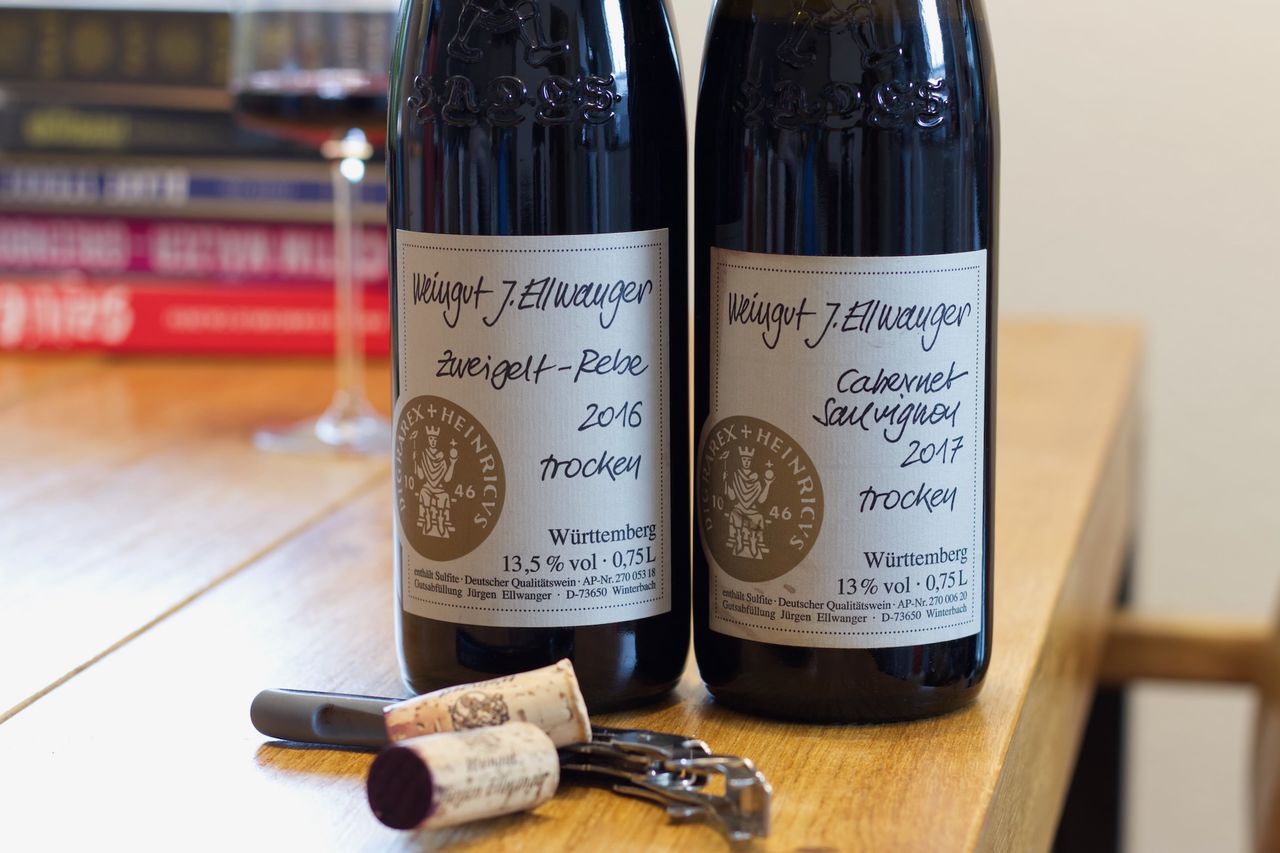
At the end of the 1980s, five Swabian wineries joined forces to age wine in small, new oak barrels, under the guidance of the Weinsberg viticulture school. I obviously don’t remember how frowned upon, or not, the use of oak was back then, seeing as I hadn’t even been born yet. Quite pragmatically, and without any blue flame atop its head, HADES in this case is simply the string of initials of the participating wineries. Without taking a dip in the Styx, today we’re drinking the E of those wineries, namely Ellwanger. The Ellwanger family now farms 26 hectares of vines, and although two thirds of the vineyard area is planted with red varieties, Cabernet Sauvignon and Zweigelt aren’t exactly part of Württemberg’s core business. Unfortunately, I can’t find any information on the older vintages, but I assume the élevage looks much like that of the wines currently on sale, and those spend two years in new barriques.
The Cabernet Sauvignon has a whole lot of spice on the nose: dark berries, oak, something stewed, Zwetschgenröster (stewed plums), cinnamon and cardamom. I look for bell pepper but find none. You can smell that it was given a few more years to mature after bottling. Taste it, however, you cannot. I obviously don’t know how furry this was at the start, but right now it really grabs hold of the tongue. Like, seriously. It pulls at cheeks and palate and then just stays there. Still, the acidity keeps managing to slice through and bring freshness. Only the genuinely lovely fruit fails to make the leap from nose to tongue. Too much oak, too much acidity right now.
There’s more fruit, more spice on day two. It feels dense, tightly knit, with plums and damsons and dried fruit. There’s still tannin, plenty of it, but by now the acidity stands up to it so well that even the dark, tart berries make their way onto the palate. Aronia, sour cherry, something dark blue. It’s really fun like this.
We’d been out the day before and were so tired that more than one glass wasn’t in the cards. So there’s a third evening. This third evening is the rug that really ties the room together. Everything has drawn even closer together. The tannin a step back, the fruit a step forward. There’s something floral, a touch of sweetness now on the palate, and even though the punch from the tannin still lands, you simply enjoy drinking it just as it is. We do, at least. Vanilla, depth, complexity, and somehow it feels as though we’re still early with this 2017. Great wine.
The Zweigelt, a year older still, is more fragrant. A mix of slightly artificial cherry and herbs. It’s reminiscent of wholesome juice from the health food store next to a piece of marzipan. There’s noticeably less tannin in this wine. The extra year won’t be the decisive factor here, this was surely tamer from the very start. It’s juicy, less dense, but just as much fruitier on the tongue. Cherry, juice, oak. With every sip the tannin builds its tower, and by the end of a glass you’re no longer quite sure why you thought at the beginning that there was less fuzz to be found here.
Day two is darker. The better half smells licorice, we then settle on licorice with fruit gummies attached, because that slightly artificial-seeming cherry is still there. The tannin is even softer. And even though the way the first evening unfolded made me cautious, today it stays that way. Almost easy-drinking, but only almost. It’s berried, soft, intense and fresh, and about as good as the Cabernet. Quite unlike the latter, though, not much happens here on day three. No harm done, because it still brings plenty of joy. You don’t have to grow Zweigelt or Cabernet Sauvignon in Württemberg. But you can. And when it’s done like this, it works out just fine.