Two Chardonnay by Knewitz
We're drinking two bottles of Chardonnay from Weingut Knewitz. One as a sparkling Brut Nature from 2018 and a Chardonnay Réserve 2020.
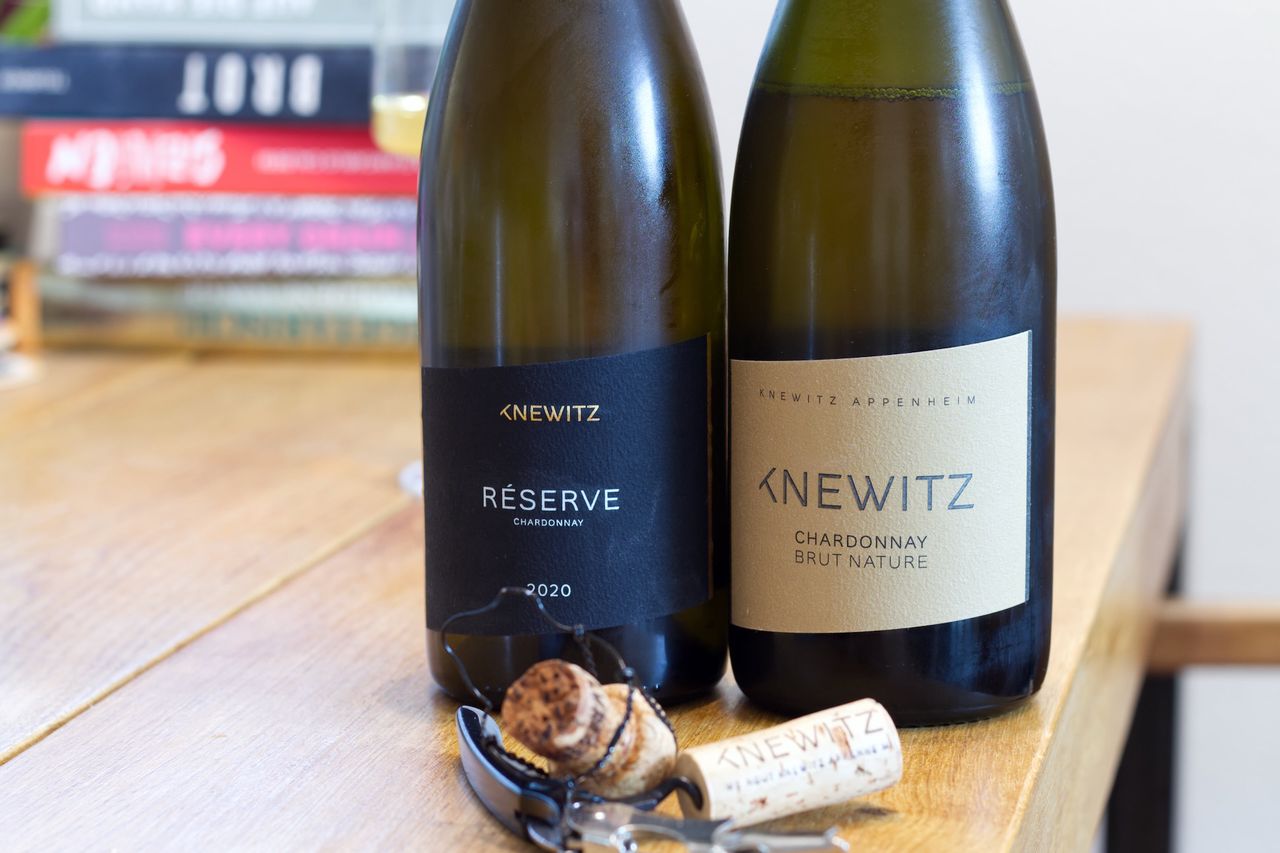
Cooking wine is commonly established as a category for wine that you do pour into the cook, but above all into the dish, which is then usually braised. But what happens when the cook, given the outside temperature, mutates into a braised dish himself? Does every wine then become cooking wine? Think about that for a while, it’s certainly warm enough. The two bottles, cooking wine or not, are in any case well chilled to stand up to the heat, at least for a while. These aren’t the first two bottles of Knewitz here on the blog, but quite a bit has happened since last time. The most striking change is probably the eagle that now sits on the neck of the bottle. Knewitz has been a member of the VDP since 2022. There are new labels too, though today’s bottles still carry the old ones, which I personally somehow like better than the new ones. A matter of taste. The website seems to be broken at the moment. At least it is for me. So for label comparison pictures, shops or social media will have to do.
Tobias and Björn Knewitz make wine in the 5th generation in the Welzbachtal in Rheinhessen. In the old days, the really old days, there was sea here, and what remains of the sea and its inhabitants provides the limestone in the soil on which the vines grow today. Although Rheinhessen is Riesling country and Riesling also plays a leading role at Knewitz, the estate is, at least in my head, known for Chardonnay. And by now you can’t really call that fact an insider tip anymore. I think, there are three Chardonnays in the range. The entry level, which used to be called “aus dem Holzfass” and, by the looks of it, is now named “Aus dem Tal”. Above that the Réserve, and then the Sekt we’re drinking today. There may also be an estate wine. Without a website and wine list, I can’t verify that at the moment. The base wine for the Sekt is spontaneously fermented, aged in a 500-litre cask and then laid down in the cellar for two years of bottle fermentation before being bottled without dosage. Brut Nature. The grapes for the Réserve grow in the Steinacker. In this case, the wine is aged in small oak barrels with about one third new wood.
The Sekt feels cool on the nose, perfect in these temperatures, has a touch of lactic character, fine yellow fruit, stone fruit and brioche. I like that a lot. It starts with plenty of drive on the tongue, then the lactic notes come through here too, and towards the finish it becomes more and more citrus fruit in the acidity. Pulling that much freshness out of 2018 is impressive. Although the harvest for sparkling base wine is a whole chapter of its own anyway. It tugs at the edges of the tongue, has great bubbles and gets juicier and juicier as you drink. With every sip, the stone fruit shifts a little more towards pome fruit in flavour, and the acidity likewise moves from lemon more and more towards green, crisp apple. Clear, juicy and with plenty of structure. Strong.
Holy reduction is the first thought that shoots through my head with the Réserve. Apart from flint, there isn’t much to be found at first. And anyone who fundamentally doesn’t like that in their Chardonnay should give this wine a wide berth. Because it may never quite age away entirely. But with eager swirling it gets nuttier in the glass, a bit of popcorn, buckwheat, something stony and austere is there, and a slightly herbal fruit behind it. You can taste the buckwheat too, followed by a juiciness that is every bit the equal of the Sekt’s. And here as well, every sip gets a little juicier, more citrusy, more lime-driven, while at the same time the reduction, at least on the tongue, slides into the background. The length helps too, as it gives you time to swirl the wine in the glass between sips. If I didn’t know better, I’d say the vintage was practically current, that’s how young the wine seems to me.
It becomes less reductive overnight. Sure, there’s still a whole box of cap gun caps in there, but there’s also more nut, more buckwheat and considerably more fruit. The structure on the palate has changed too, it feels more mellow now, fruitier, more appley. The length is still impressive, the acidity pulls the saliva right out of your cheeks, and more air from swirling now acts like a little catalyst that further accelerates the overnight development in every glass. Exotic notes appear in the fruit, pineapple, mango, and the acidity moves more in that direction again as well. This is enormously good and at the very, very beginning of its development. But since it seems so young despite already having a few years in bottle behind it, I don’t dare make a prediction. Anyone who opens one now will have fun in any case. But waiting is probably worthwhile too.