Nicolas Jacob - Les Chazaux 2023
From the Jura, we drink a bottle of Les Chazaux 2023 Chardonnay by Nicolas Jacob.
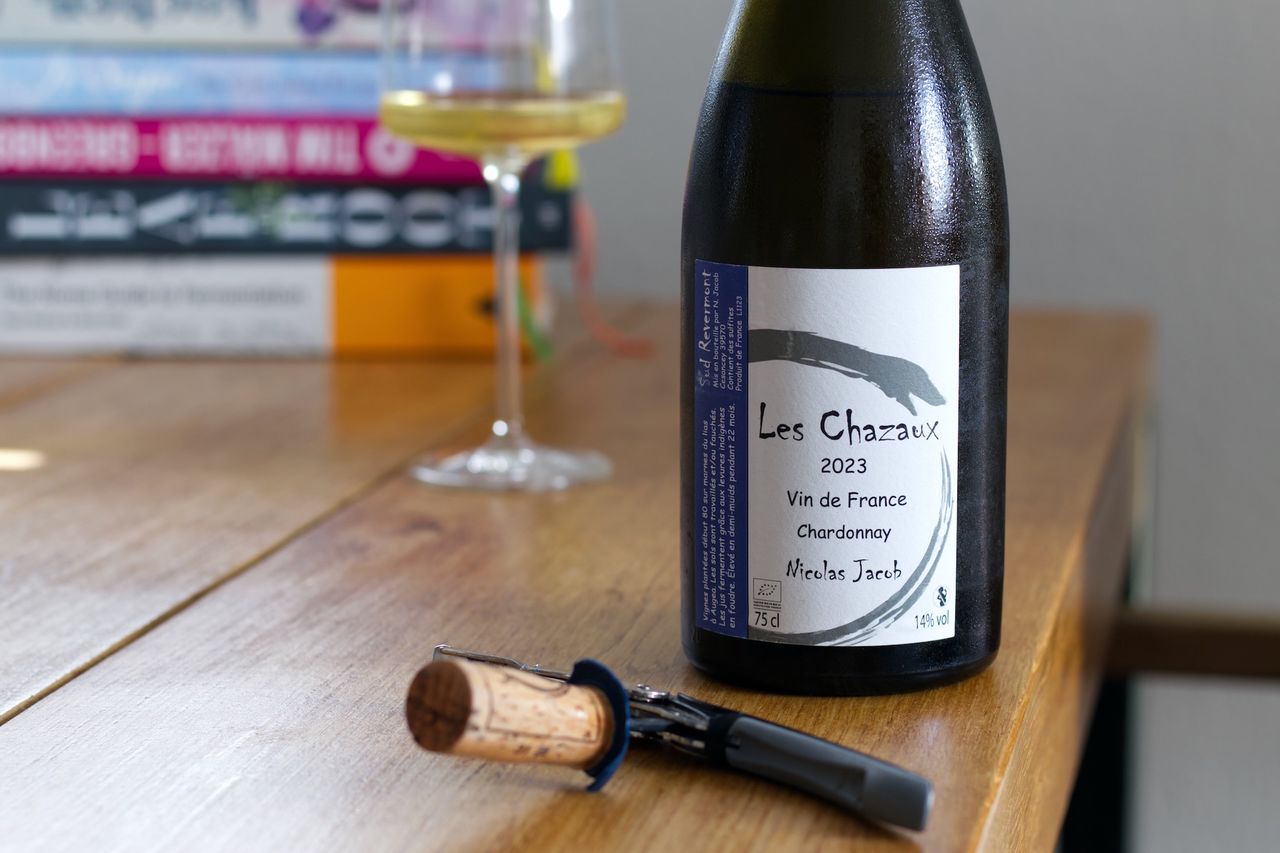
I’m fully aware of the absurdity. Just a few weeks ago, I was loudly proclaiming that I had stopped chasing unicorns, that I basically only buy bottles from the Jura that are actually fairly easy to get. And today, this bottle. If you go looking, it’s only available in bundles. The kind of bundles where one bottle is this wine and five bottles are something else. Unicorn alert. In my defense: until Alex’s newsletter, I had never heard the name Nicolas Jacob. Holgi once said on Wrint Podcast that when you read a newsletter like that, you basically always want to buy immediately. No matter which wines are in it. And Holgi is right. So there can be no talk of unicorn hunting. If I believed in root days, this wine wouldn’t have shown up here anyway. It was one of those Friday evenings when you pull one cork after another and nothing sings. Not even the guaranteed singers. But then, then came Les Chazaux. Thank goodness we like to cook. That way, root-day wine gets to live a second life as a sauce. Not a bad fate, after all.
Nicolas Jacob first grew vegetables. Then he worked at Jean Macle and eventually spent time with Jean-François Ganevat. Those are names you’ve heard before. At least if you like drinking Jura. But probably even if you don’t. In 2015, he started making his own wine from a single parcel, which has since grown to six hectares. The grapes for today’s bottle grow in the Les Chazaux vineyard in Augea. The wine is spontaneously fermented and aged for almost two years in old Fuder casks before being bottled with little or no sulfur. That it is neither fined nor filtered goes without saying for this kind of wine.
The first sip, by the way, was difficult here too. Apart from sharp acidity, nothing much came through at first. But already the second sip proves the root-weekend believers wrong. This is enormously taut, has lactic notes and plenty of citrus fruit, yuzu, lime, lemon, all present. On the nose, but even more so on the palate. And that whole basket of citrus fruit simply refuses to leave the tongue. This is really long. And at the same time so clear in its fruit, so radiant. There’s a bit of tannin, a bit of resistance, a bit of structure, maybe even a lot of structure that only feels like a bit of structure because of the mouthwatering acidity. Because that acidity pulls the saliva right out of your cheeks and your palate. It wipes away everything else that might be there. At the same time, the wine feels creamy, yuzu-yogurt mousse or something like that. The nose can’t quite keep up with the pace, becomes leaner, picks up a touch of glue and more spice than fruit. But the mouthfeel, the mouthfeel is nothing short of brilliant. Damn it. Do I have to go chasing unicorns again after all?
It gets fuller on the second day. At least on the nose. A bit mustier, minimally at least, and perhaps more in how it feels than in how it actually smells. And that’s how it tastes, too. There’s more orchard fruit, hardly any citrus left. There’s stone and a hearty spiciness. Spice is the keyword on the tongue by now as well. Overall, it’s simply not as citrus-juicy anymore. But it’s not one bit worse for it. It has simply become different. There’s less reduction, but no less length. And the saliva flows with the wine just like on the first day. Peach, a bit of quince, and the yuzu returns as well. I’d say it has become more complex, and that complexity was bought with a touch less easy drinking. Whether that’s a good deal is something everyone has to decide for themselves. Or you swirl more, because the more oxygen you give the wine, the more the juiciness comes back, and the yogurt-lime dessert returns too. Oh, and by the way, this thing clocks in at 14 percent. If it weren’t printed on the bottle, I wouldn’t believe it. Too light, too fresh for that. At some point you’ll feel it. But if you give the bottle time, it doesn’t really matter anyway. Brutally good, in any case.
Related Posts
- Domaine Labet - En Chalasse 2016
- Bruyére-Houillon - Les Nouvelles 2016
- Buronfosse - Les Ammonites 2018