Mythos Mosel 2026 - Day 2
After a two-year break, we were back out and about on the Mosel again. The travel report on Mythos Mosel 2026 - Day 2.
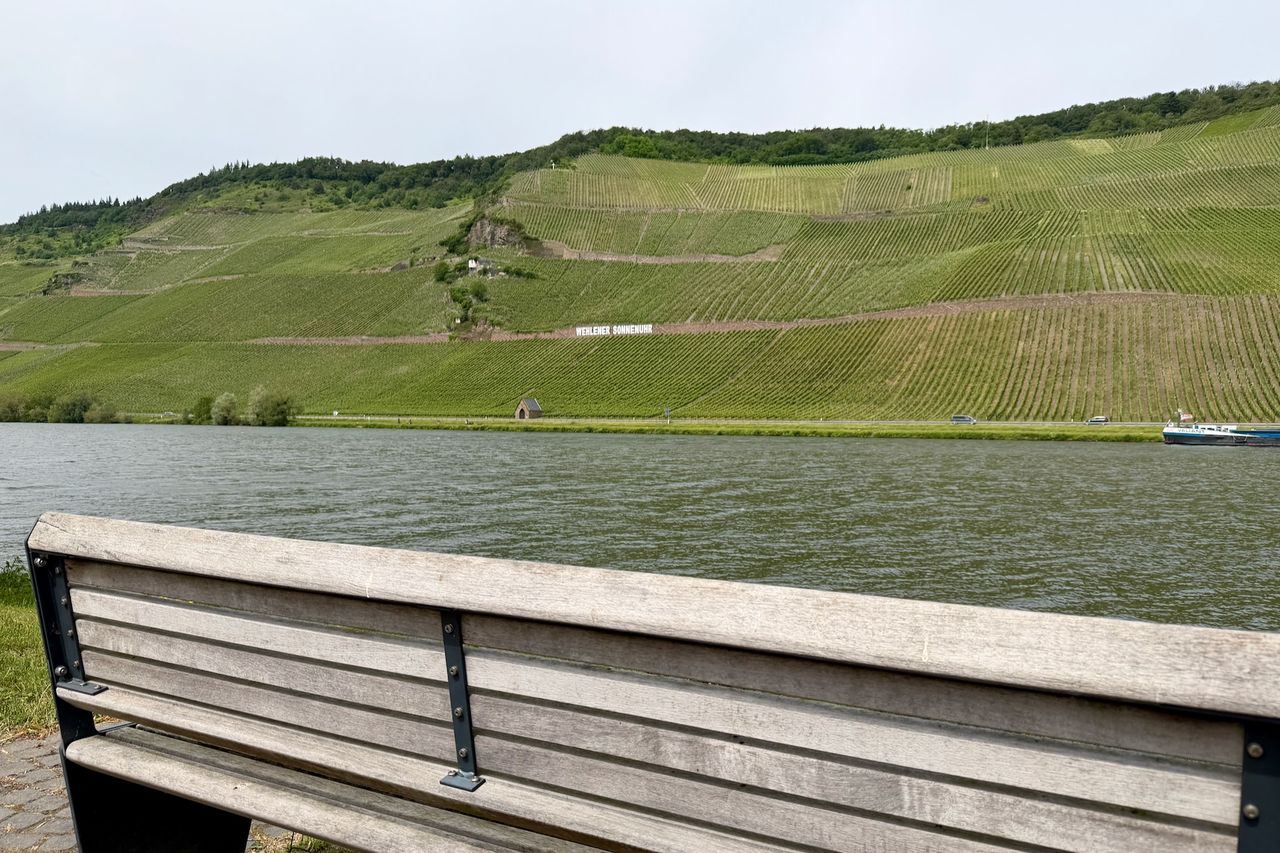
The plan for day two is simple: we work our way along the bus line that, for us, starts in Zeltingen and ends in Zeltingen too. In concrete terms that means Graach, Schloss Lieser, Wehlen and Zeltingen to finish. How fitting that the day in Graach kicks off with a Kabi warm-up even before 11 a.m. Anyone now wondering what on earth we’re actually doing here would do well to read Day 1. In theory, the journey there on the local transport network would be covered by the ticket too. In practice, Graach may be just one little village over, but on a Sunday morning it’s only reachable by public transport with a change and a wait, or a longish walk to the stop on the other side of the Mosel. So we take the shuttle. Departure as before at 10:12 a.m., and today too we’ll have plenty of luck with the bus.
From 9:30 a.m. you could already have drunk your way through the Mosel at the Kabi warm-up at Blesius. And not only that. It had clearly been set up as a big get-together, and at the back of the courtyard stand two large coolers full of Kabis from Rheinhessen. And the Rheinhessen folks didn’t hold back either. All single-vineyard. So even without visiting Maxime Open this year, we get a little cross-section. Given the many people making use of the early start just as we are, the notes do fall a bit short, though. Just this much: Heiligenblut Blutberg Kabi is superb, Manz Hipping likewise. Riffel Bingen Kirchberg stands out with a herbal, angular minerality. Engel Frauenberg thanks to the orange note in its fruit. And the Espenhof La Roche won us over too, with its citrus nose and steely, smooth acidity. There are even more people at the Mosel cooler. There was a bottle of auction Kabinett that was really lovely. Unfortunately I noted down neither the estate nor the vineyard, and by the time I wanted to check again, the bottle was gone.
At 11 o’clock sharp things really get going. Conveniently, Willi Schäfer’s table is right next to us. Graacher Himmelreich Kabi 25 is still very young, but behind it is everything it needs to become really good one day. Domprobst Kabi 25 already seems considerably further along. Drive, lovely fruit, plenty of length. I’d drink that one on the spot. Why the bottle reads Domprobst while the view over the rooftops into the vineyard behind Graach reveals Dompropst, who knows. The two Spätlesen, again Himmelreich and Domprobst, are like the Kabis. Just more. More sugar, more density, more depth. Himmelreich still washed-out, Domprobst already fully there. And the Domprobst GG 2024 from Blesius is in a lovely place too. Plenty of spice, hardly any fruit, lots of texture. Himmelreich Kabi 25 with lots of citrus and juice. At Franzen the Sommer was great again, at least according to the name of their wine. The 2025 vintage, a wine to chew on. Neefer Frauenberg GG 23 is a wonderful combination of richness and spice. 22 Fachkaul GG with reductive funk, creaminess and a touch of bitterness. That is brutally good.
Next station: Kees-Kieren. Blesius-Jostock have brought an alcohol-free PIWI Sekt, Zero Sparkling. Very fragrant. At 43 grams of residual sugar per liter it isn’t exactly what we usually drink, but there’s enough acidity, freshness and fruit not to feel full after the first sip. And the Souvignier Gris Eiswein is good for a second sip too. But then that’s enough. It’s simply a lot. Delicious though, no question. At Lotz, with the Schieferstein 25, we taste one of the strongest entry-level Rieslings of the weekend. There’s so much structure in it. Just like in the Erdener Treppchen 25 Feinherb. Terrific wines.
At the other end of Graach, at the DRK Sozialwerk in the St. Nikolaus Hospital, the station awaits visitors in the cool wine cellar. A dream today. The Erdener Riesling 25 from Mönchhof is full of structure, length and density. The Prälat Auslese 21, pleasantly light at 85 grams of residual sugar, light for an Auslese, that is, still has a slight funk and a crystal-clear, beautiful fruit with plenty of drive. You pour yourself a second glass of that one too. The Mehringer Riesling 24 from Lenhardt is a structure wine. Hardly any fruit, but really intense. Blattenberg 24, grown on slate with a quartzite component, has even more structure and even more density. That is seriously good. And the Spätlese and Auslese impress as well. Just like the chili con carne and smoked-fish rolls, which we polish off so well-timed that, only a short sprint to the bus later, we’re off towards Lieser. A perfect landing.
The plan works out, and it’s much more relaxed at Schloss Lieser than what we saw in passing on Saturday. If you have two days: do the bigger-name stuff on Sunday. Really. At Clemens Busch the grey-slate bottling still feels unsettled, while the Pünderich vom blauen Schiefer 24 is all the lovelier for it. Pünderich Nonnengarten 23, with dark stone and lots of structure, very good. Marienburg Kabi 25 with lots of funk, but then depth and structure. Carl Löwen Maximin Klosterlay 25 makes your tongue pucker. Austere, intense and yet somehow round. Wonderful. Riesling 1896, from vines dating to that very year, is a whole lot of Riesling. But perhaps better to wait another 3 years before opening it. Zilliken Rausch Kabi 25 is one of my favorite Kabis and proves once again why. Lovely fruit, lots of drive. The mature Rausch Spätlese 11 then shows, in turn, why patience is a virtue. A little petrol, lots of stone, pome fruit, soft, creamy, beautiful. After that, everything remaining here has a hard time, as expected. But the 23 Wehlener Sonnenuhr Spätlese from Schloss Lieser still sets down an exclamation mark, juicy, long and intense.
Today we’re standing right at the correct stop. Or rather, running to the correct stop. Without my better half’s attentive eyes it would have turned into a wait, as it is, it’s another perfectly timed bus landing. A few minutes and some small, winding paths through Wehlen later, we’re standing in the courtyard at S.A. Prüm. Here you could spend more time watching the swallows feeding under the eaves than tasting wine. But we’re not here for fun, right? After all that Riesling, every year I’m grateful that Stephan Steinmetz makes his way here from the Upper Mosel. The Crémant Blanc, with no sugar at all, and the Crémant Rosé at 2 grams have correspondingly lots of drive. Just buy both. The Unkultiviert, which here on the blog was still a still wine, is now a pét-nat. It suits it, though, and the Elbling is a joy too. The Monteneubel 1425 Riesling Brut Nature from Immich-Anker has even more drive than the two Crémants, with lots of pastry notes and taut, clear acidity and fruit. Christoph Eifel again has a slightly herbal nose right across the collection, which I liked 3 years ago and at the follow-up too. Still like it.
We’re heading into the final stretch: station Kerpen. Röttgerding delivers another noteworthy entry-level Riesling, full of spice, from 23. And with the 23 Spätburgunder, the only red wine on a list so far, unless I’m much mistaken. Undergrowth, fruit, spice. An estate I hadn’t had on my radar at all, but do now. The special tasting, with a 2001 Spätlese from Kerpen themselves and a 2002 Spätlese from Vollenweider, then quite unexpectedly contributes perhaps the two best wines of the weekend. After that you could really just drive home. Beautiful. But of course we don’t. Steven Schmidt Wolfer Sonnenlay Kabi 22, almost ethereal, stony, intense. And the rest of the Kerpen collection is worthwhile too, not least for the Auslese 2017, which doesn’t quite reach 2001 but doesn’t stay far off it either. Vollenweider Goldgrube im Reiler 24, austere, dense, stony, very young, and Trabener Schimbock Monopol 24, denser still, more intense, gripping, then see to it that Kerpen gets to climb to the very top of the podium in my internal station ranking.
We take the bus one more time. And once again we wait less than 5 minutes. Should I ever complain over the coming years, do link me this here. Then I’ll keep quiet. That was under 35 minutes of waiting across the whole weekend. You really can’t expect less than that. And we somehow managed to dodge the rolling sardine tins too. Perfect. The better half’s stomach is rumbling by the end of the bus ride, so Ackermann, or rather the Spundekäs at Ackermann, gets bumped up the order. There was Pinot from Knodt-Trossen yesterday already, in the form of the Reserve at the red-wine special tasting at Pauly. The smaller Kirchlay 22, with marked oak, cassis and cool fruit, sadly doesn’t quite reach that level, but that is totally fine. The Steffensberg Riesling 24 from the small wooden cask is the only Riesling so far with marked oak influence, and I think it suits it very well. Ackermann Deutschherrenberg 25 Kabi has a few green notes, herbs and drive. That freshens you up again this late on a Sunday.
That’s also the point at which you start wondering whether you’d open a single bottle of Riesling in 2 months, or better make it 3. All the better, then, that, provided you make it past the fountain in Gessinger’s cellar without incident, at Rinke you don’t have to drink any Riesling at all if you don’t want to. The Blanc de Blancs Brut Nature, at any rate, with its 50 months on the lees, is a real pleasure to me, with a touch of glue, great structure and a creamy mouthfeel. The Sauvignon Blanc Fumé 23 is orange wine for non-orange-drinkers who appreciate structure in their Sauvignon. In general, all of Rinke’s wines have a brilliant mouthfeel. Stairs’n’Roses has PIWI in its luggage. The Unforgiven I is Souvignier Gris. When Souvignier Gris is well made, it can have really wonderful structure, and this one, this one is well made. It also comes as Unforgiven II, from the same fruit, as an orange wine. That one’s for the advanced crowd. The alcohol-free Sekt from earlier, a collaboration between several estates, is on the table here too. And the Ohrenschwein, an orange wine with an official AP number, which doesn’t appear on the list but earns a mention for its name alone. At Gessinger itself I only taste Spätburgunder now. There it was above all the Privée that won me over, which picked up just a hint of oak from fifth-fill Fuder casks.
On the way to the hotel we also drop by the Heinrichshof, we’d been in the garden at Leo’s the evening before for a nightcap. But taking notes, that really wasn’t on the cards anymore. Not because of too much alcohol, but too much standing, too warm, too much Riesling, more people than I’m usually used to over two days, at some point it’s time for a verdict. Because I still owe you a verdict. About 2025 I can’t really say all that much. They were fresh, sometimes still a bit unsorted. But often it was 24, 23 or even older in the glass. All in all: Mythos Mosel is magnificent. Standing in front of the steep slope, or, depending on your appetite for hiking, right in the middle of it, is something different from looking at steep vineyards in photos. That alone makes it worthwhile. And of course the wines and the people behind them. Almost always it’s the winemaker themselves standing there, and on Sunday in particular there’s more time than just for holding out your glass. Nowhere did we drink badly. Moving on was always down to limited time and never to the first tasting sip already being a dud. That wasn’t always the case in recent years. So the baseline is getting stronger. In return, perhaps, the outliers at the top were less frequent. But stations like Kerpen as a whole today, or estate discoveries like Karp-Schreiber yesterday, almost justify the trip on their own. And then there’s the Mosel itself, too. Almost every view a spectacle, the footpaths, including, gladly, the longer footpaths from Mülheim to Lieser or from Mülheim to Brauneberg, are never wasted time. Here the journey remains the destination, and that’s wonderful. Well, at least if you manage not to get taken out by the squadron of pensioners riding three abreast with e-bike wing mirrors. But you learn that quickly too. We’ll be back.
Related Posts
- Mythos Mosel 2026 - Day 1
- Schloss Lieser - Goldtröpfchen GG 2021
- Heymann-Löwenstein - Uhlen Blaufüsser Lay 2020