Two Bottles Heitlinger
We are drinking a Grauburgunder and a Weißburgunder from the Oberöwisheimer Kirchberg from the Heitlinger winery from 2023.
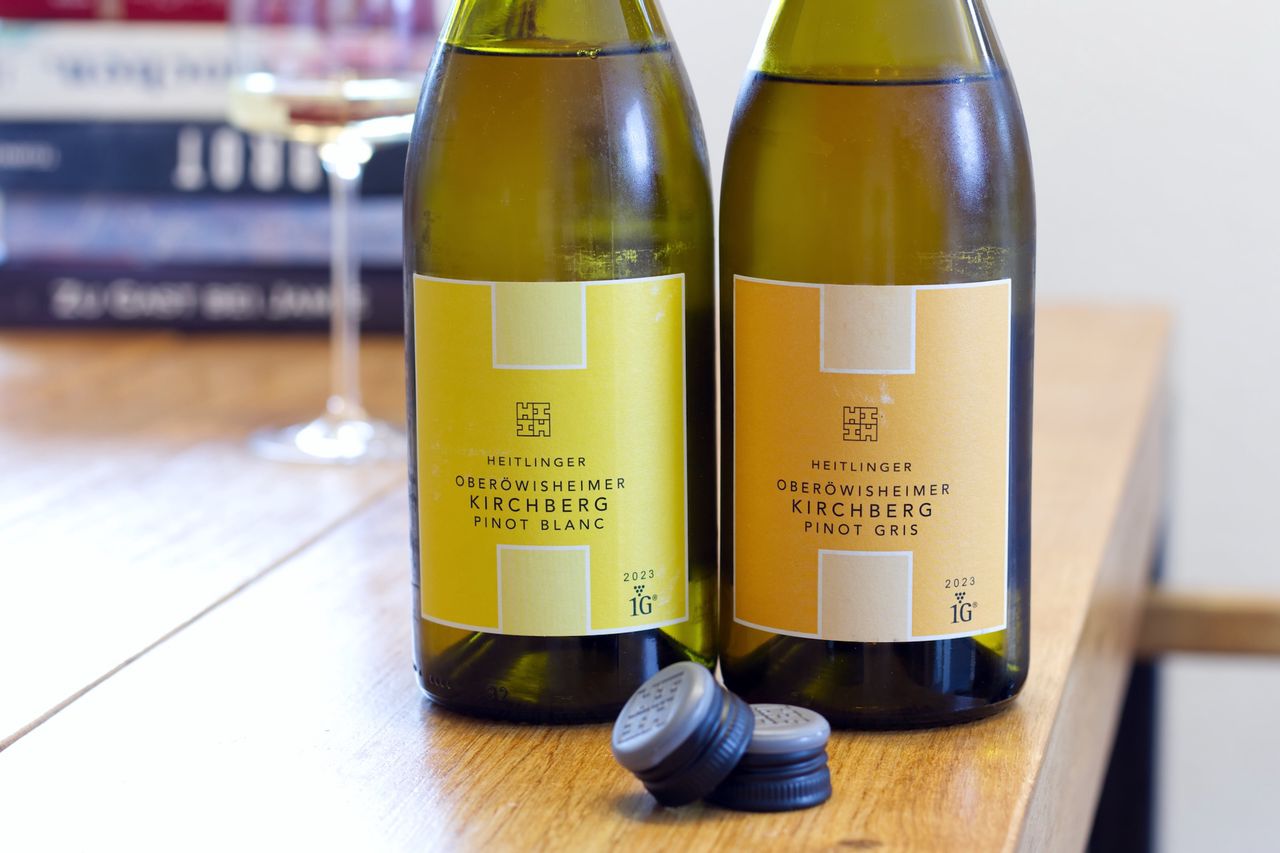
My wine purchases have become quite focused on the blog lately. Most cases are a wild hodgepodge of bottles that I either know or hope will be a good fit here. Sometimes it works out, sometimes it doesn’t. And sometimes I pull things out of the cases that make me wonder for a moment what on earth possessed me to press the buy button. Weißburgunder and Grauburgunder? Why? Although the bottle here says Pinot Blanc and Gris, respectively. Maybe it’s easier to get the wine out to the public that way. And at Weingut Heitlinger, there’s a lot of wine to get out to the public, at least if you go by the cultivated area. Around 80 hectares around Tiefenbach in Kraichgau in northern Baden are cultivated, which is well above the average of 28.5 hectares that a VDP estate has under its wing according to published figures from 2023. If you also add the area of Weingut Burg Ravensburg, which is part of the same company, it’s even around 120. Whether after two or three glasses every tee shot on the in-house golf course still goes in the direction of the intended hole, who knows. In any case, the vineyards are farmed organically, and the varietal mix is dominated by Spätburgunder, Grauburgunder, and Weißburgunder, each accounting for about a quarter of the vines.
The grapes for the two bottles today grow in the Oberöwisheimer Kirchberg, slightly northeast of Bruchsal, or as my better half would say, Bruusel. The vineyard is, at least according to the label, classified as VDP Erste Lage, but it does not appear as a premier cru on the VDP’s own vineyard map. Whether it’s not yet or no longer, I don’t know. The 2024 vintage, at least, is still sold as an Erste Lage, although the wines might only be bottled for a single merchant, as a search on the winery’s homepage is also in vain. So be it. The vines here grow on calcareous loess soils, where monks were already practicing viticulture in the 12th century. A long tradition, then.
We start with the Weißburgunder. It smells bright, very creamy with a slightly undefined but yellow fruit. It’s not really exciting on the nose, but then again, it’s Weißburgunder. That’s often the case, and the wine can still be absolutely magnificent. On the palate, there’s a real drive behind it, a lot of freshness and then texture that clings from the tip of the tongue all the way to the back of the palate. It’s a whole lot of fun.
Not much changes overnight. The wine is young and under screw cap, so the clocks of maturation tick slower. It has perhaps become a bit creamier. I, for one, prefer drinking it to sticking my nose in the glass. The other way around would be better for the half-life of an open bottle, but you can’t have everything. The structure is great, has something of pome fruit and fruit juice acidity, with a little more softness on this second evening. This is the kind of wine you can just put on any table and everyone will like it.
The small remainder that made it to the third evening is my favorite. The wine has become more pithy again, more structure, more depth. If this is a foretaste of the years to come, then you can safely wait a bit longer before opening.
The Grauburgunder is not far off from the Weißburgunder. A bit darker in its fruit, so far, so expected, yellower, with more citrus. And on the palate, the grip is completely different, somehow more austere, with citrus peels and a slight bitter note. It seems clearer and at the same time more angular in its profile. I like it more tonight.
Day two gets even darker. More orange than lemon now, some kumquat, and overall even more depth in the fruit. On the palate, much more so than on the nose. It’s almost a bit reminiscent of Aperol on the tongue, bitter orange, tart. There’s more tension than in the Weißburgunder, more to discover, simply more depth. Every sip is a little different from the one before, and so you can drink your way through the glass, sip by sip, without getting bored. On the second evening, the Grauburgunder is number one as well. It therefore unfortunately has to sit out the third evening.
I will continue to frown in the future when I pull Grauburgunder and Weißburgunder out of cases. Was that really such a good idea? But if they turn out like these two. Then yes.